


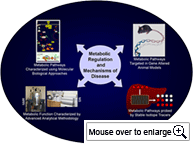
The Burgess Lab studies the regulation of metabolism and the metabolic basis of disease by combining classical molecular biological approaches and gene altered animal models with stable isotope tracers and analytical platforms to characterize the function of targeted metabolic pathways in normal and pathophysiology.

|
|||||||||||
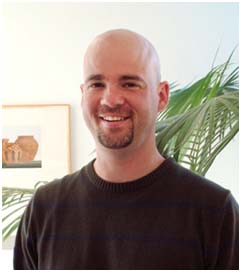
Shawn C. Burgess, Ph.D.
Research Overview
Mammalian physiology requires extraordinary metabolic flexibility in order to adapt to variations in nutrient availability and energy requirements. This regulation is executed through hormone signaling, enzyme expression/modification and substrate level factors that act in concert for the ultimate purpose of controlling biochemical flux through specific metabolic pathways. Ultimately, it is the dysregulation of flux through metabolic networks that triggers the manifestation of disease. The Burgess lab uses Nuclear Magnetic Resonance spectroscopy and mass spectrometry in conjunction with the application of stable isotope (non-radioactive) tracers to study metabolic function. These approaches are applied in combination with standard molecular biological and biochemical methods in gene altered animal models and isolated cells to study the metabolic basis of disease. We focus mainly on pathways of lipid and carbohydrate metabolism in liver, kidney and β-cell in the context of obesity, insulin resistance and diabetes or in models with specific interventions in hepatic energy and carbohydrate metabolism. Both the technologies and metabolic insight from these studies are translated towards the understanding of human physiology by partnering with clinical scientists to study human subjects. Our goal is to use cross-disciplinary approaches to provide a clear understanding of how molecular biology influences metabolic function in physiology and disease.
Contact: shawn.burgess@utsouthwestern.edu
Research Interests
| Biological NMR methods | In Vivo and Ex Vivo isotope tracer techniques |
| Intermediary metabolism: Elucidation of metabolic pathways | Metabolism in animal models of diabetes and obesity |
© The University of Texas at Dallas
